Salt air and coastal condensers: corrosion and how to slow it
If your outdoor unit sits within sight of the Gulf, Naples Bay or a saltwater canal, salt is working on it every day. You can’t stop that, but you can slow it down, and most of what helps is plain fresh water.
How salt gets to your outdoor unit
Wind off the water carries fine salt spray, and the fan on top of your outdoor unit pulls air straight through the coil, so the coil collects whatever the air brings. One major manufacturer says salt water can be carried as far as two miles from the coast.
How fast it does damage depends on how far the unit sits from the water and which way the wind usually blows. Humidity and coil temperature matter too, and so does whatever else lands on the unit, including spray from the sprinklers.
A condenser on a Pelican Bay or Marco Island rooftop is about as exposed as home equipment gets. A heat pump in a Golden Gate side yard has it much easier.
What salt corrosion does to an AC
Many outdoor coils are copper tubing with aluminum fins. Where those two metals meet in salty, wet air, galvanic corrosion sets in, and over time it can lead to refrigerant leaks and system failure.
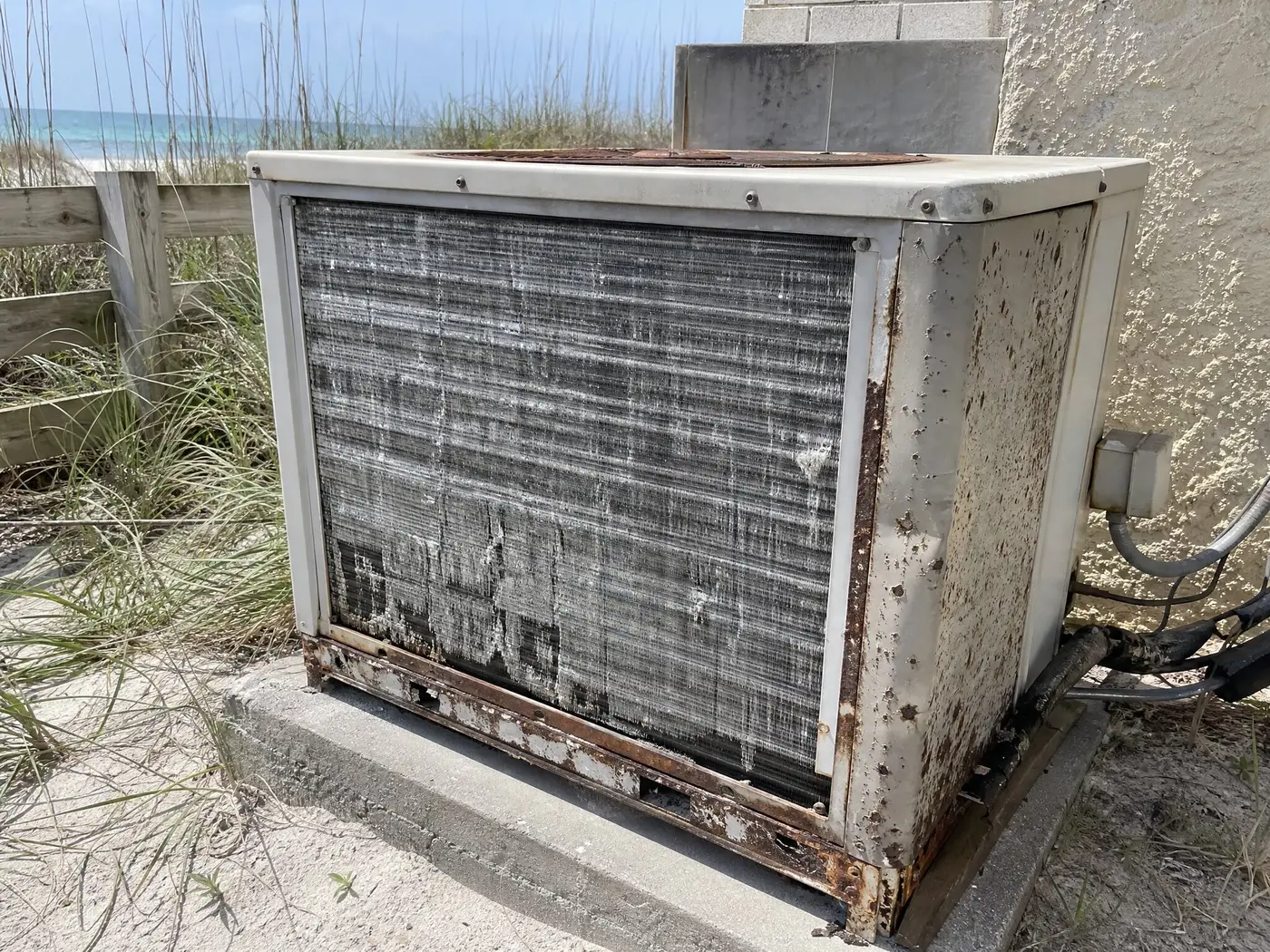
The photo at the top of this page shows what advanced damage looks like: a white crust across the fins and rust through the cabinet base. Fins that are crusted and thinned can’t shed heat the way they should, so the system runs longer to do the same job, and the metal parts of the cabinet rust from the bottom up.
How to slow corrosion on a Naples condenser
Most of this comes straight from manufacturer installation and care instructions.
- Rinse the cabinet and coil with fresh water often. A manufacturer’s installation manual says frequent washing removes most of the salt that builds up.
- Turn the power off at the disconnect before you rinse, and let the unit dry before you turn it back on.
- Use a garden hose on a gentle setting. A jet setting or a pressure washer bends the fins.
- Keep sprinkler heads from spraying the unit.
- Keep plants and debris at least two feet away so air moves freely through the coil.
- Wax the cabinet now and then with a good automobile polish. The same manual says it gives some protection.
- Have the coil cleaned with a proper liquid cleaner a few times a year to remove what water alone won’t.
What we do on a coastal maintenance visit
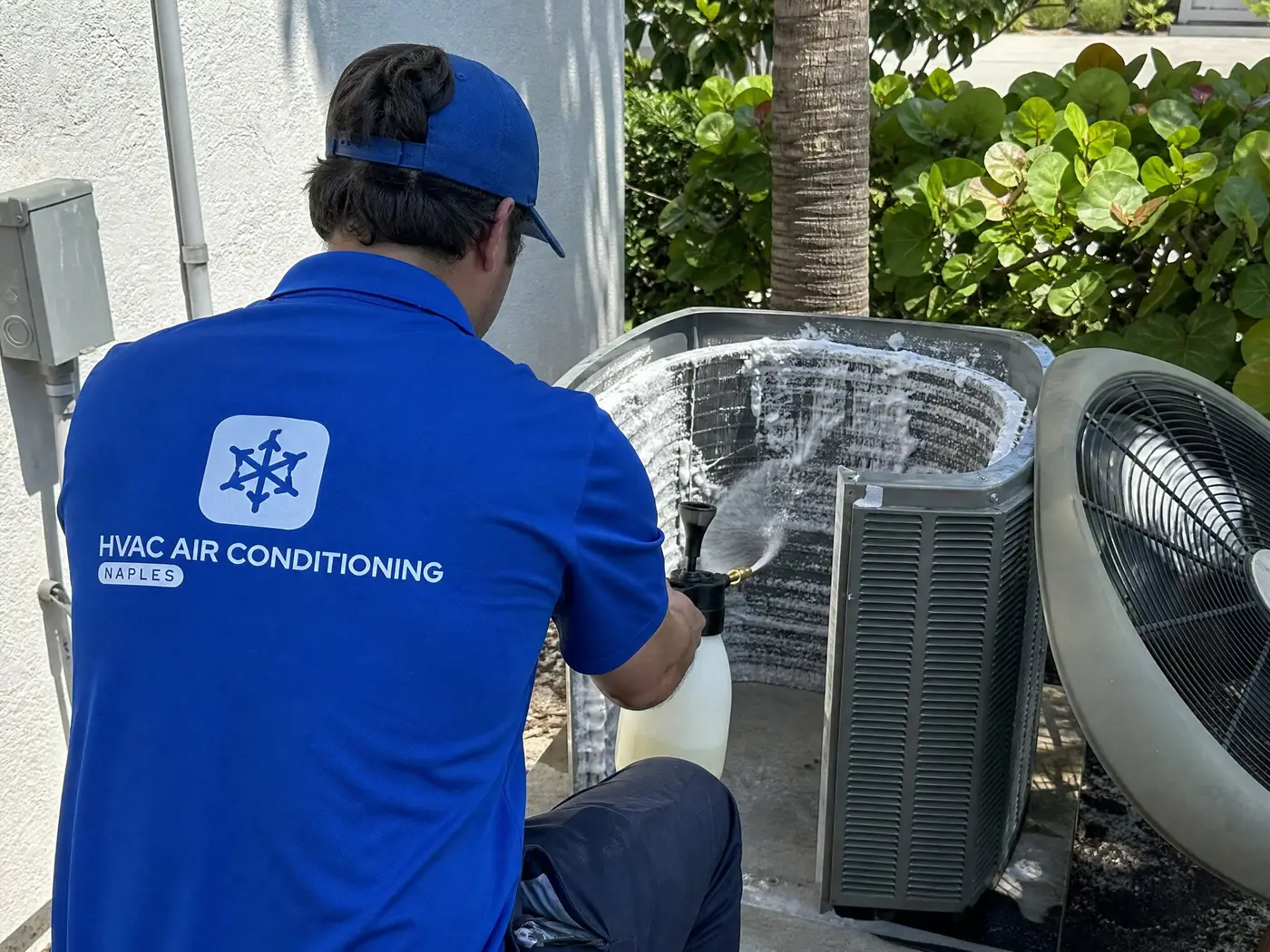
We lift the top off, clean the coil with a coil cleaner, rinse it from the inside out with fresh water, and straighten any fins that have been bent.
Then we look closely at the places salt goes after first: the cabinet base, the fasteners, the electrical connections, and the copper lines where they meet the coil. Catching a weak spot early gives you time to plan a replacement instead of reacting to one.
Choosing equipment for a coastal house
At replacement time, where the new unit goes matters as much as which unit you buy. One manufacturer’s installation manual says to put the outdoor unit on the side of the building away from the waterfront in coastal areas, when the lot allows it.
Several manufacturers also sell coastal versions of their equipment, with coated or all-aluminum coils that avoid the copper-to-aluminum joints where galvanic corrosion starts, plus heavier coatings on the cabinet and hardware. They cost more up front, and for a unit facing the beach we think they’re worth pricing.
Straps, stands and fasteners rust as well, so we check them on every visit along with the unit itself.
Rooftop condensers on condo buildings
On a condo building the condensers often sit together on the roof, in the full wind off the Gulf, with nothing between them and the spray. They take the brunt of the salt, and they’re harder to reach than a unit in a side yard.
If your building’s units are up there, ask the association how often the roof equipment gets washed and who does it. In unincorporated Collier County, replacing a rooftop unit also goes through plan review instead of the county’s self-issued permit, so it pays to plan a replacement before the old one fails.
When corrosion means replacement
A coil leaking from corrosion can sometimes be replaced on its own. On an older system near the beach, though, the rest of the unit has usually taken the same beating, so we’ll look at the coil, the cabinet and the age of the system and give you a straight read on repair versus replacement.
No cooling? Call or text us.
Or open the chat button. Tell us what the system is doing and where the equipment sits, and we’ll set up a visit.
Need ac maintenance?
AC maintenance is what we do every day. Call or text and tell us what the system is doing.
Questions we get
How often should I rinse my outdoor unit?
The manufacturer guidance we follow says frequently and doesn’t give a fixed schedule. The closer you are to the beach, the more often it needs it, and units on Gulf-front condos and Marco Island canal lots need it most.
Is coastal equipment salt-proof?
No. It resists corrosion better, but the same manufacturers still call for regular cleaning and maintenance. Coastal equipment buys you time, not a pass on rinsing.
Can I pressure-wash the coil to get the salt off?
No. High pressure flattens the aluminum fins. Use a garden hose on a gentle setting with the power off.
Does salt damage show up inland too?
Much less. Salt exposure drops off with distance from the water, so a unit in Golden Gate or Orangetree rarely looks like one on the beach.