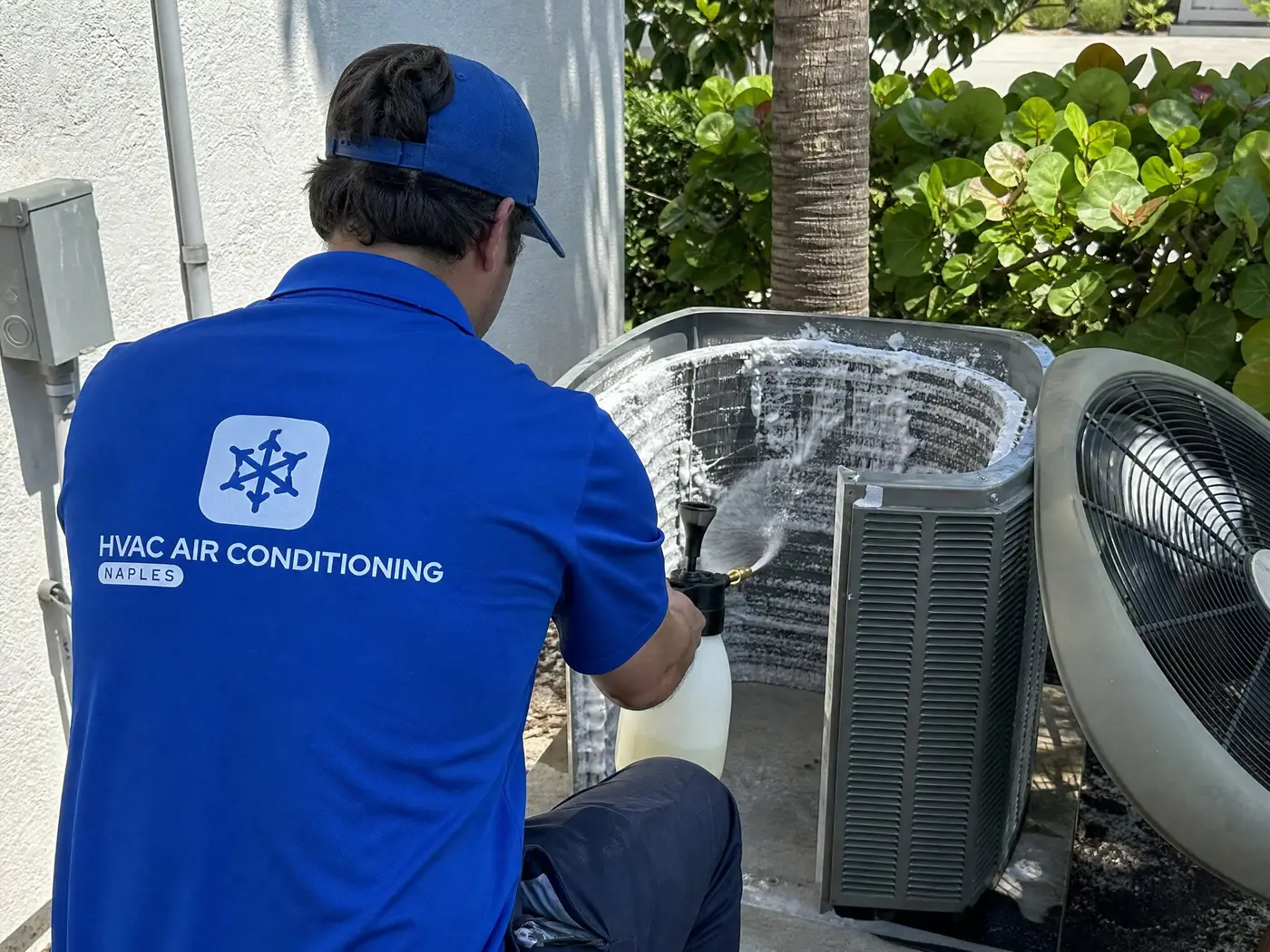
AC maintenance in Naples, FL
A maintenance visit covers the outdoor coil, the drain line, the electrical parts and the refrigerant charge, with extra attention to salt on coastal units. It’s how small problems get caught before they turn into a breakdown in August.
Why AC maintenance in Naples looks different
ENERGY STAR suggests a contractor check-up on the cooling system every spring, before the busy season. In Naples there isn’t much of an off season, so we treat that visit as a look at everything the last long stretch of running has worn down.
Two local conditions change the checklist. Salt off the Gulf collects on outdoor coils and cabinets, and seasonal homes sit closed for months with the air conditioner doing all the work of keeping humidity down.
What an AC maintenance visit covers
Every visit includes these, drawn from the ENERGY STAR maintenance checklist and University of Florida extension guidance:
- Thermostat settings and operation checked
- Electrical connections tightened, with voltage and amp draw measured on the motors
- Capacitor tested
- Outdoor coil cleaned and rinsed with fresh water, and the cabinet checked for corrosion
- Indoor coil and blower wheel inspected, and cleaned when they need it
- Refrigerant charge checked and adjusted if it’s off
- Temperature drop across the indoor coil measured
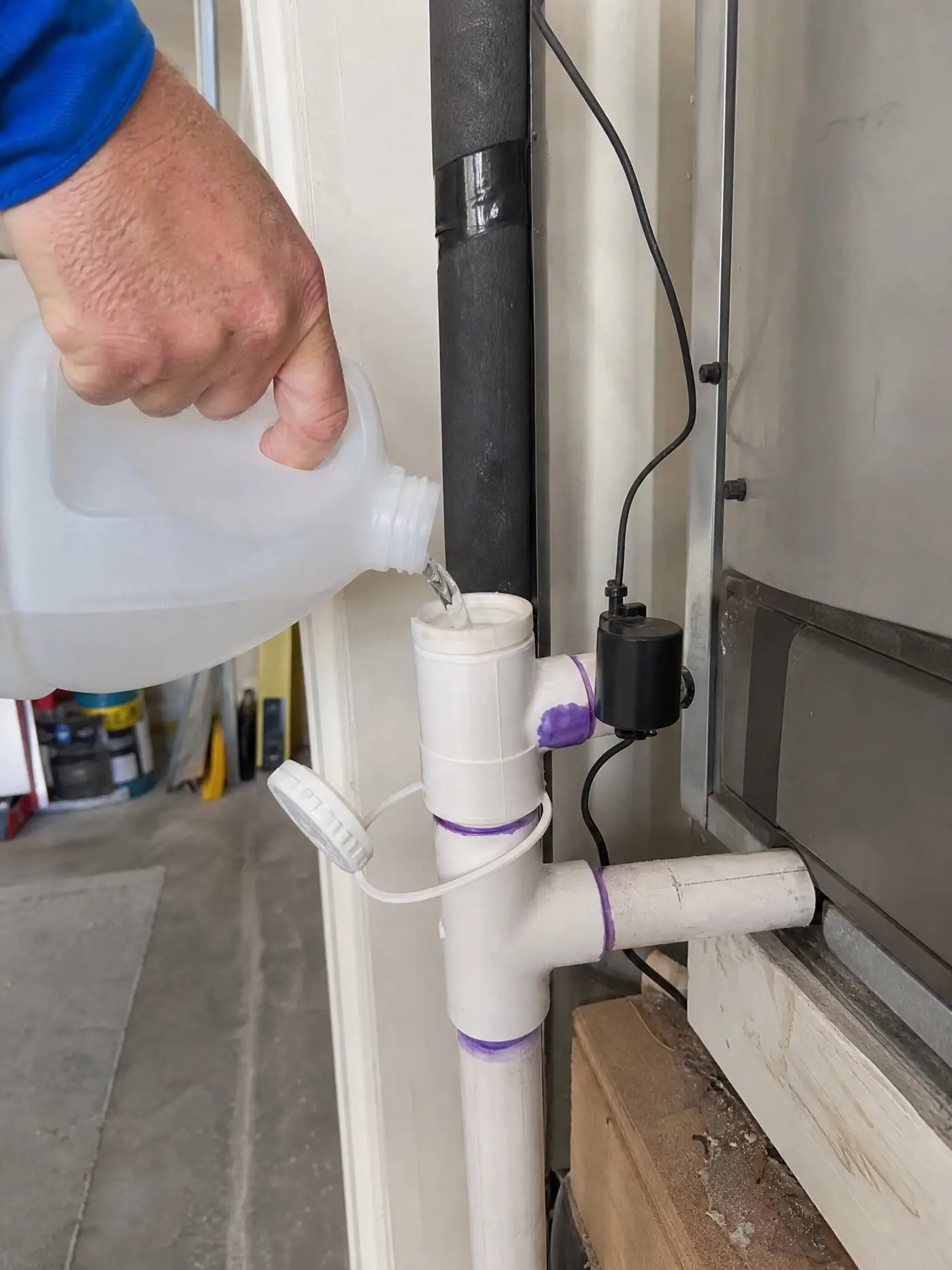
- Condensate pan and drain line cleared, and the float switch tested
- Air filter checked
- Start-up and shut-down watched to confirm the system cycles the way it should
The drain line gets attention every time
Here the condensate drain carries water nearly every hour the system runs, and mold and mildew growing in standing water are a common reason it plugs. ENERGY STAR notes that a plugged drain can cause water damage and affect indoor humidity.
We clear the line, flush it through the cleanout, and make sure the float switch shuts the system off when the water rises. Florida code requires a backup like that switch or a secondary drain, and a working one is the difference between a dead AC and a wet ceiling.
Coastal units need rinsing between visits
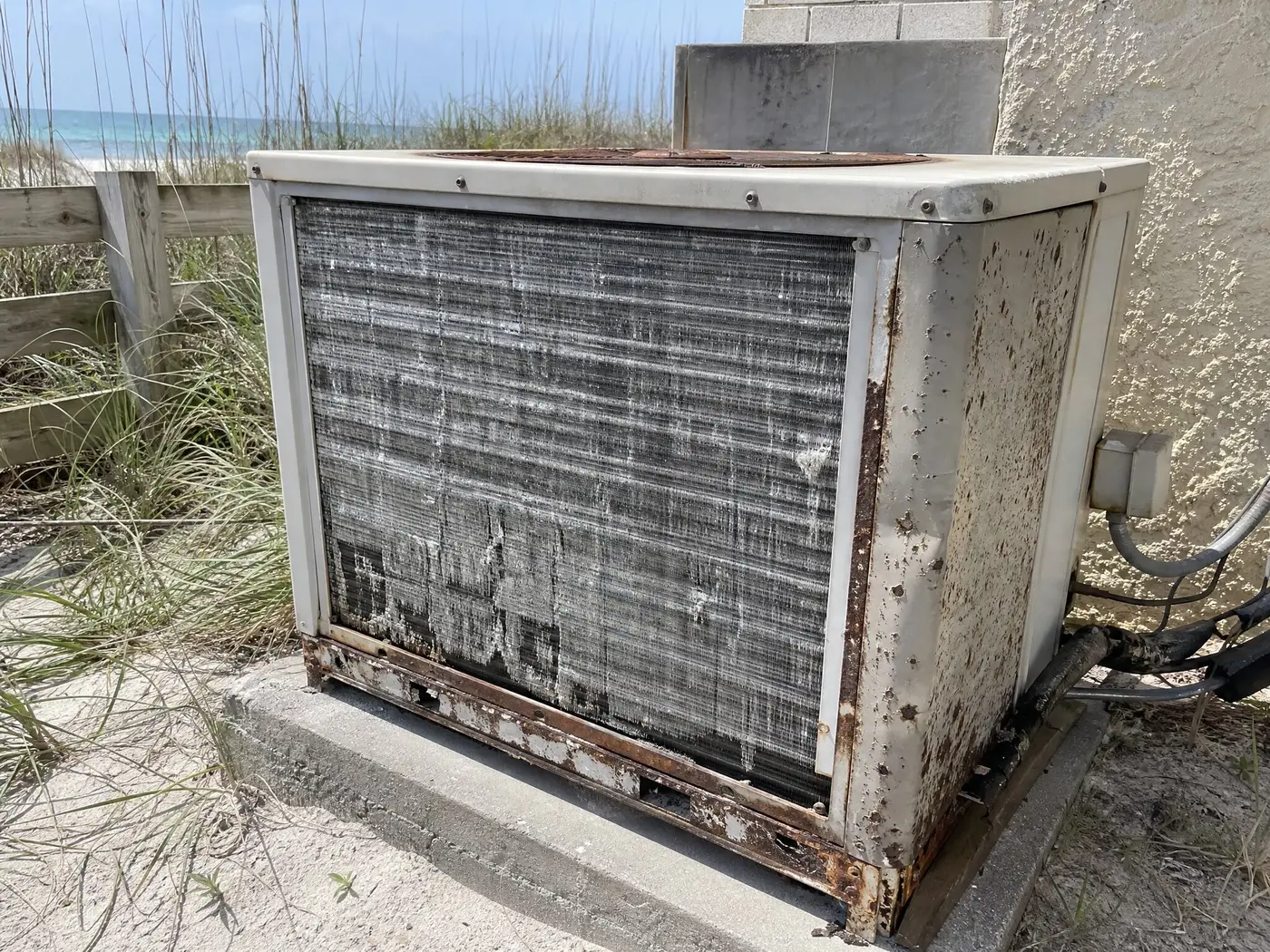
This is what salt does to an outdoor unit nobody rinses: the fins crust over white, the cabinet base rusts through, and in the end the coil leaks.
A manufacturer’s installation manual puts the fix plainly. Frequent washing of the cabinet, fan blade and coil with fresh water removes most of the salt that builds up. We do it on every coastal visit, and we’ll show you how to do a gentle rinse yourself in between.
There’s more on this in our guide to salt air and coastal condensers.
Small findings worth catching
Most maintenance visits turn up something small. A capacitor that’s weakening with age, a contactor with pitted contacts, a drain trap that has gone dry, a strap rusting at the pad, or fins packed with lint and grass.
None of those stops the system today, and some can wait a season. We note each one, tell you which ones we’d fix now and which can wait, and leave the decision with you. A weak capacitor swapped in March is a much smaller job than a no-cooling call over the same part in August.
Your part in between
Check the filter once a month and change it when it’s dirty. ENERGY STAR recommends the monthly check, and a clogged filter is an easy way to end up with a frozen coil.
Keep shrubs and anything stored outside at least two feet back from the outdoor unit, and aim the sprinkler heads away from it.
If you rinse the outdoor coil yourself, turn the power off at the disconnect box first and use a garden hose on a gentle setting, never a pressure washer, because the aluminum fins bend easily. Let it dry before you turn the power back on.
AC maintenance for seasonal homes
If you leave for the summer, University of Florida extension guidance suggests having the air conditioner serviced about three weeks before you go, along with a new filter and a clean drain line. That leaves time to fix anything we find while you’re still in town.
We can also set the thermostat up for an empty house. Our seasonal home humidity guide explains the settings, and why the common advice to leave it at 85 often isn’t enough.
No cooling? Call or text us.
Or open the chat button. Tell us what the system is doing and where the equipment sits, and we’ll set up a visit.
Related
AC repair
Warm air, frozen coils, water at the air handler, humming outdoor units and refrigerant leaks, in Naples homes and condos.
AC repair detailsAC installation and replacement
New air conditioners, heat pumps and mini-splits, sized for the house, strapped down and tested before we leave.
AC installation and replacement detailsSalt air and coastal condensers
How Gulf salt corrodes outdoor AC units in Naples, what the damage looks like, and what slows it down.
Read the guideHumidity in a closed-up seasonal home
What humidity to aim for while you’re away for the summer, why 85 degrees often isn’t enough, and settings that worked in Florida testing.
Read the guideQuestions we get
How often does a Naples AC need a tune-up?
At least once a year, which is what ENERGY STAR recommends. Units close to the beach also need their coils rinsed with fresh water more often than that, either on our visits or by you with a garden hose.
Do you clean the indoor coil too?
We inspect it every visit and clean it when it needs it. According to ENERGY STAR, dirty coils cut a system’s ability to cool and make it run longer.
Can I rinse the outdoor unit myself?
Yes. Turn the power off at the disconnect box next to the unit, use a garden hose on a gentle spray, and keep it off the jet setting. A pressure washer will flatten the fins.
Do you service ductless mini-splits?
Yes. We check them the same way we check a central system, from the coils and drains to the electrical and the charge.
What should I do before closing the house for the summer?
Book a visit a few weeks before you leave, put in a fresh filter, and read our humidity guide before you set the thermostat.