Humidity settings for a Naples home left closed for the summer
A closed-up house in Naples doesn’t need to be cool while you’re gone. It needs to stay dry. Here’s what to aim for, what Florida research found about the usual thermostat advice, and how to set the system before you lock up.
Why humidity matters more than temperature
Florida air is warm and wet all summer, and an empty house has nobody adjusting anything. University of Florida extension guidance on closing a seasonal home sums up the goal in two words, clean and dry, and warns that unoccupied homes are more likely to suffer mildew and moisture damage.
The air conditioner is what keeps the house dry. When it runs, it pulls water out of the air and sends it down the drain line. When it doesn’t run, the moisture stays.
The humidity numbers to aim for
Below 60 percent
The EPA’s guidance for preventing mold is to keep indoor relative humidity below 60 percent, and ideally between 30 and 50.
Below 65 most of the time
Researchers at the Florida Solar Energy Center, studying vacant Florida homes for FPL, aimed for under 65 percent most of the time and under 70 percent essentially all of the time.
Why 70 matters
According to the same study, mold and mildew grow when humidity stays above about 70 percent for long stretches.
Why 85 degrees often isn’t enough
The usual advice is to leave the thermostat no higher than 85 so the air conditioner still cycles on now and then. UF/IFAS guidance says exactly that.
The trouble is that 85 doesn’t make the system run much. In the FSEC study, an AC set to 85 ran too little to remove enough moisture, especially on cooler, cloudy days, and in some test periods it never came on at all. Even 83 wasn’t reliable in every house.
That study covered three houses in Brevard County in 2004, so treat it as a careful field test, not the final word. It’s still the most specific Florida data we’ve found on the question.
Settings that held humidity down
The FSEC researchers found three approaches that worked. These two suit most Naples homes.
Timed early cooling
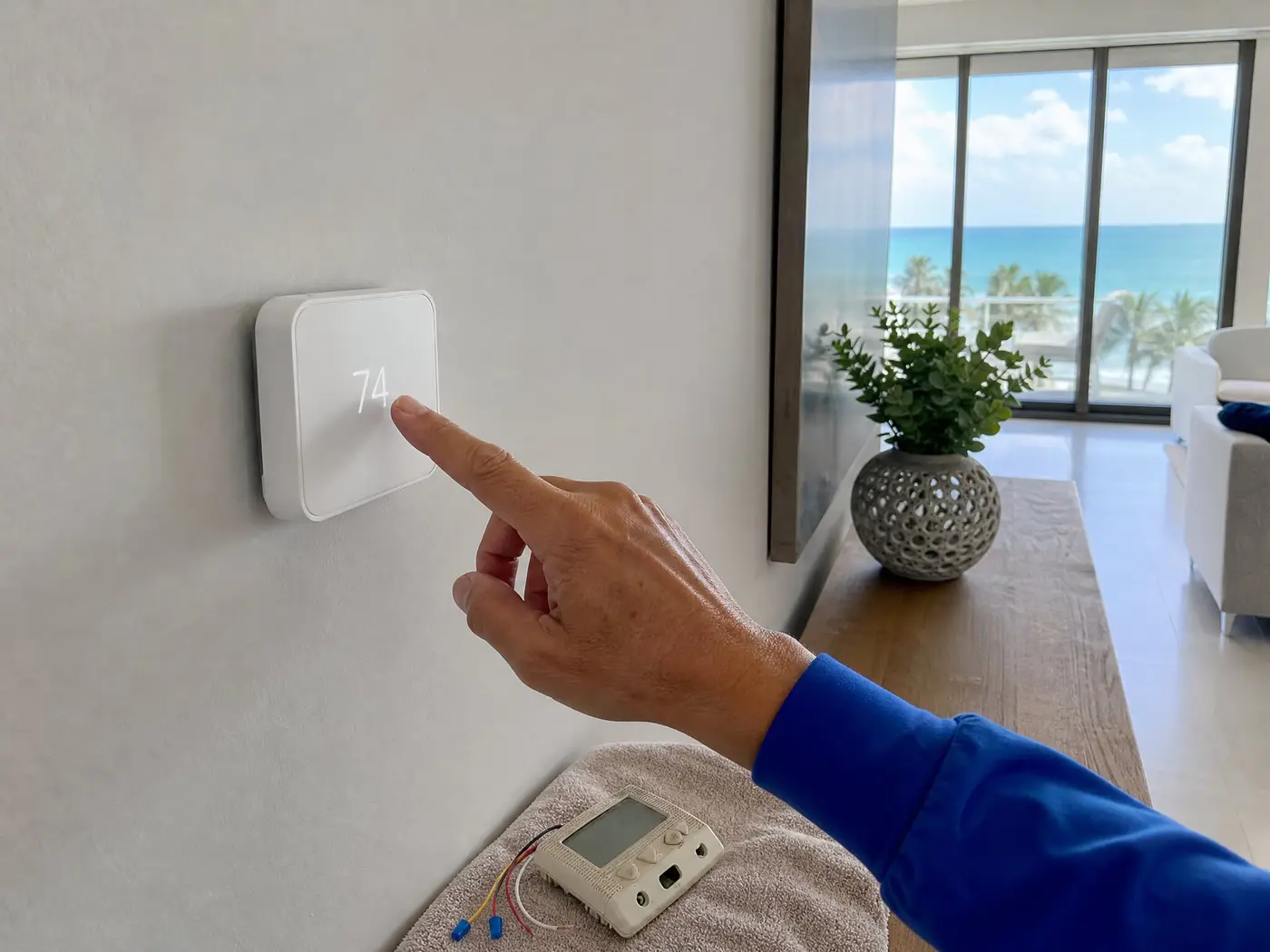
Program the thermostat to cool to 74 between 3 and 5 in the morning, and leave it set high the rest of the day. The researchers judged it to work in a majority of homes, though their leakier test house needed about four hours of cooling split across the morning.
A dehumidifier with a drain
A dehumidifier with a floor fan to move the air controlled humidity in every test home. The researchers found the built-in humidistats imprecise, so a timer was the more reliable control. It needs a continuous drain so it never fills up and shuts itself off.
Fan on AUTO, doors open
Whichever you choose, set the thermostat fan to AUTO, not ON, and leave the interior doors open so air reaches every room.
The third approach in the study was heating the house to 88 or 90 with a heat pump, which lowers humidity without removing any water. It worked, but it uses noticeably more energy in late spring and fall, and most owners won’t be comfortable with it.
Before you lock up for the summer
Adapted from the UF/IFAS checklist for closing a seasonal home and the FSEC findings:
- Book an AC check-up about three weeks before you leave
- Put in a new filter and have the condensate drain line cleaned
- Have the humidistat calibrated if your system has one
- Replace the backup batteries in the thermostat so a power blip doesn’t wipe out the schedule
- Set the fan to AUTO and leave interior doors open
- Ask someone to check the house now and then, and to read the humidity if your thermostat shows it
- Condo owners should ask the association what it looks after while they’re away
The drain line is the weak point
In an empty house, the condensate drain is the part we worry about most. If it clogs in June, the float switch shuts the system off, which is what it’s there to do, and the house then sits all summer with nothing pulling moisture out.
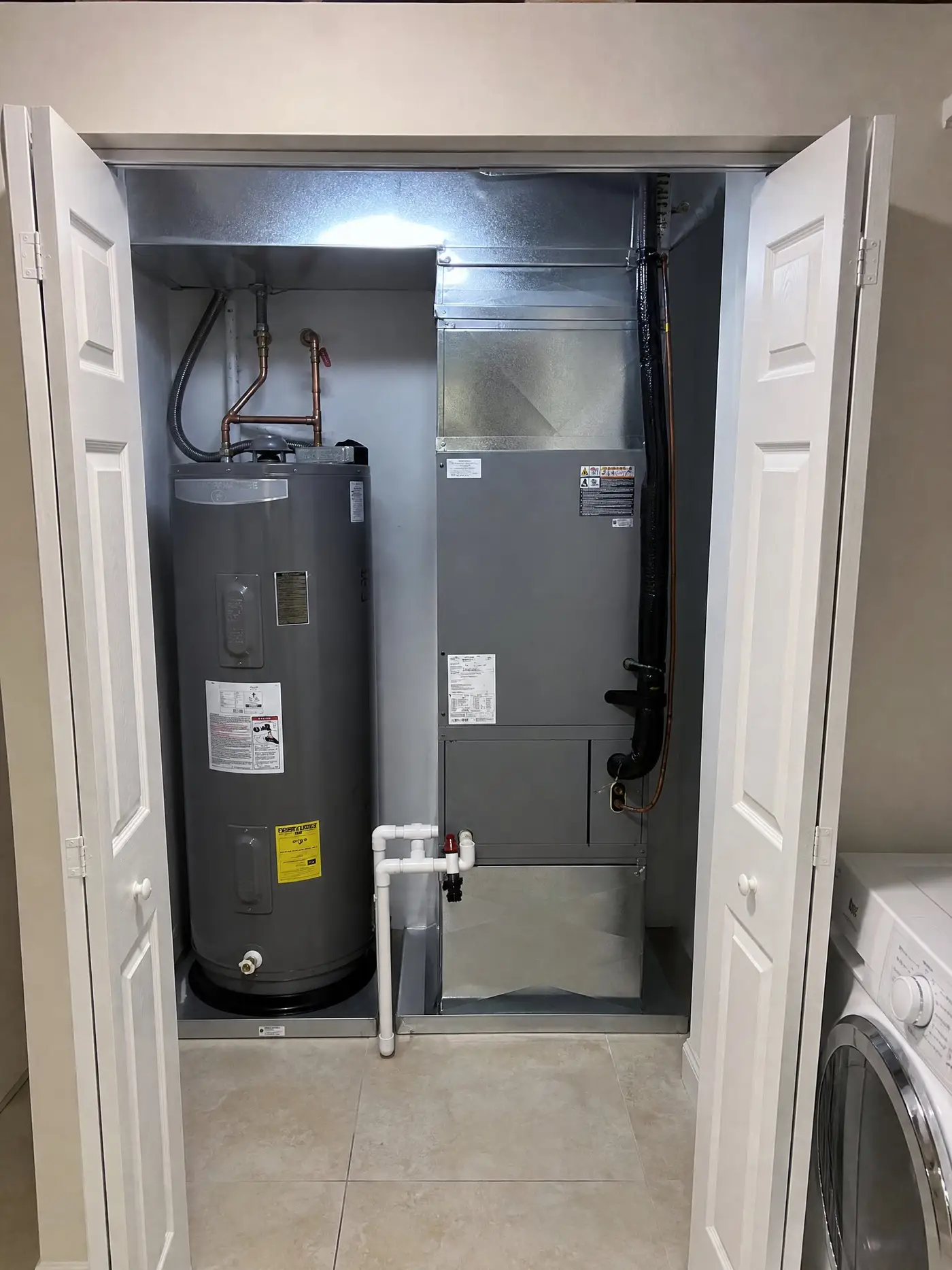
That’s why the drain gets cleaned on the visit before you leave, and why it helps to have someone who can look at the thermostat and the air handler closet every so often. Our AC maintenance page lists everything that visit covers.
No cooling? Call or text us.
Or open the chat button. Tell us what the system is doing and where the equipment sits, and we’ll set up a visit.
Need ac maintenance?
AC maintenance is what we do every day. Call or text and tell us what the system is doing.
Questions we get
What humidity should I aim for in an empty house in Naples?
Below 60 percent, which is the EPA’s line for preventing mold. The Florida Solar Energy Center’s vacant home study used 65 percent as its working target and 62 percent as its dehumidifier setting.
Should I just turn the AC off while I’m gone?
No. UF/IFAS guidance says periodic air conditioner operation is what removes moisture, and in the FSEC study, houses left with no cooling or dehumidification couldn’t reliably stay below 65 percent.
Will a dehumidifier do the job on its own?
In the FSEC study, a dehumidifier with a floor fan kept humidity down in all three homes. It has to drain continuously, and how long it needs to run depends on how leaky the house is.
Can you set this up before I leave?
Yes. We service the system, clean the drain, and go over the thermostat schedule with you before you go.